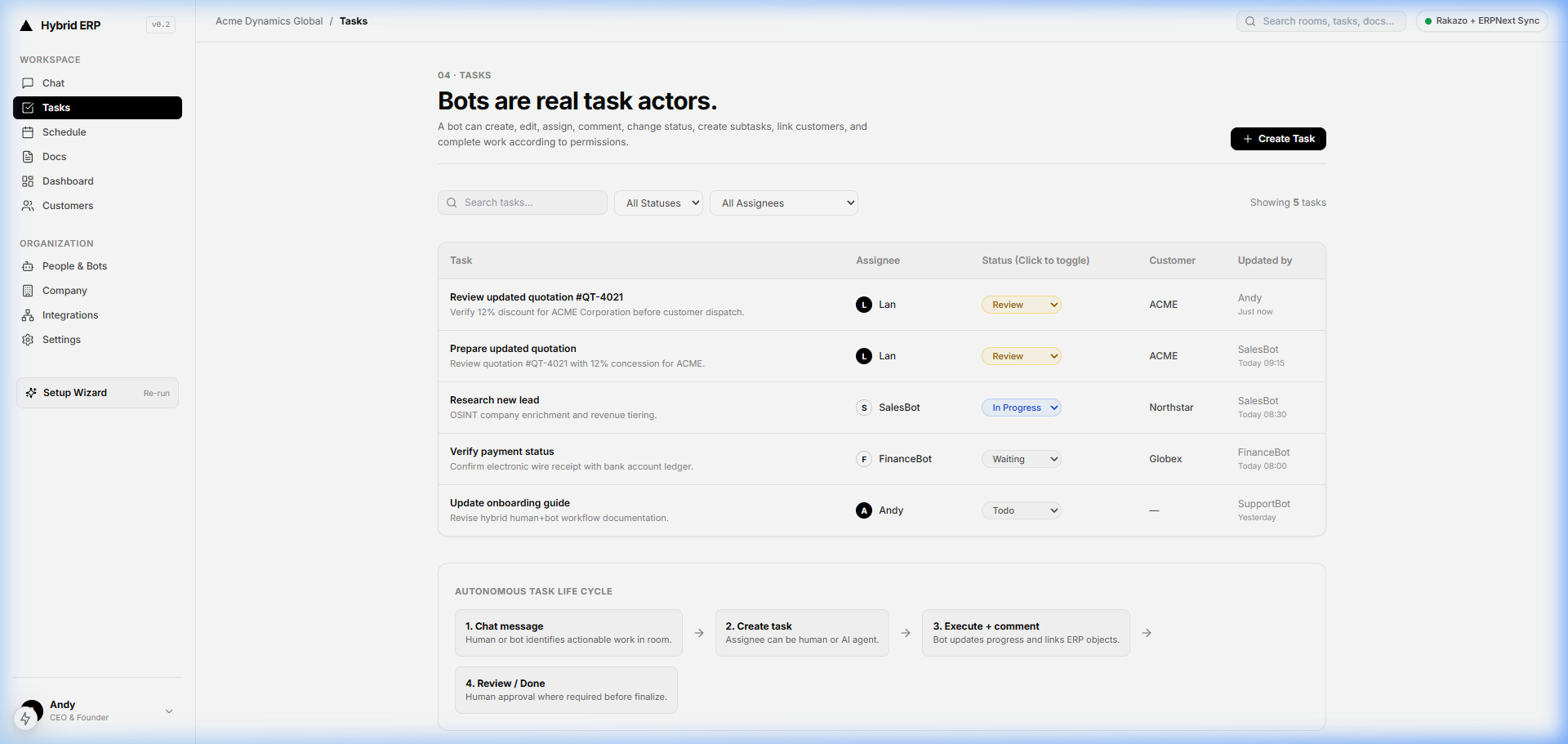
The 4 Connected Lifecycle Stages
Most enterprise task systems operate as dead ends: an employee writes a to-do item in Asana or Jira, performs the work in another software, and forgets to update the ticket. In DualForce OS, tasks are living state machines that bridge conversational room intent with structured ERP database updates.
Stage 1: Intent Extraction in Room Threads
Work begins where conversations naturally occur. When a team member mentions an inquiry in a channel (such as "@SalesBot ACME requested updated pricing for 200 units of the Enterprise Server"), the specialized departmental agent parses the contextual intent, identifies the customer entity from CRM memory, and initiates a formal task.
- Natural language entity extraction parses customer name, quantities, and urgency.
- Cross-references historical discount bands and credit limits in the ERPNext database.
- Creates a shared thread object accessible to all human participants in the channel.
Stage 2: Deterministic Task Creation
Rather than performing side-effects invisibly, the AI agent auto-drafts a formal Task entity. The task specifies whether the assignee is an AI agent (for automated computation) or a human operator (for managerial review).
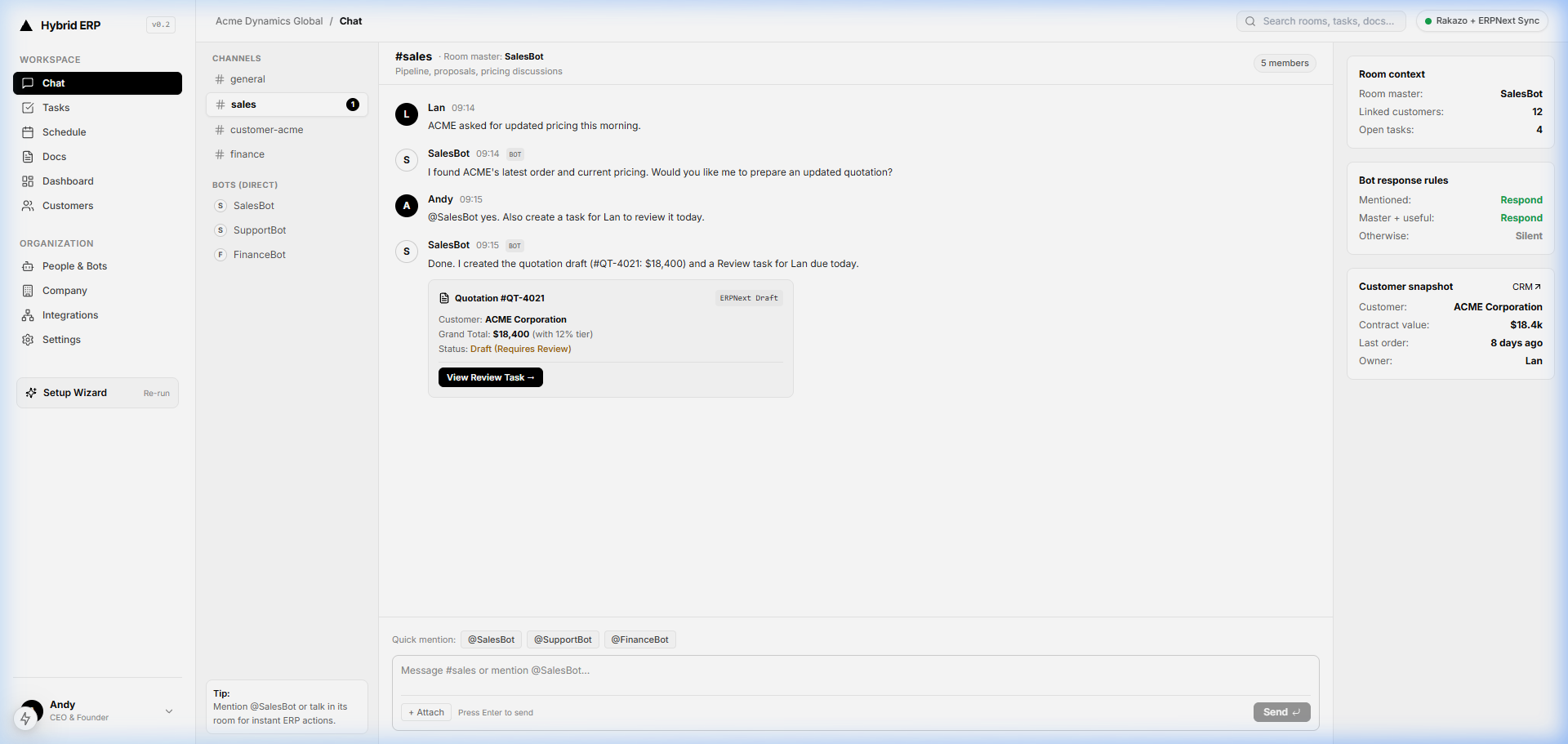
Stage 3: Autonomous Tool Execution & ERP Linking
During execution, the agent triggers sandboxed MCP tools (Model Context Protocol). It queries inventory levels, applies customer-specific tier discounts, drafts an ERP quotation, and writes back step-by-step progress comments directly into the task ledger.
“Every agent step produces an audit log linking the prompt hash, tool parameters, and the resulting ERP document ID.”— DualForce Architecture Specification v2.4
Stage 4: 1-Click Human Verification & Ledger Commit
When commercial discount thresholds or financial thresholds are exceeded, DualForce OS holds the transaction in pending state. The human supervisor reviews the line items in a side-by-side modal and signs off with a single click — instantly committing the quotation or invoice to the general ledger.