
- A conventional ERP exposes its data model directly.
- Chat wins where the work is a lookup with an awkward path.
- A chat interface flattens discoverability.
Most ERP work is not decision-making. It is retrieval and transcription: finding the right record, reading a number off it, typing that number somewhere else, and telling a colleague it is done. A chat-first ERP is an attempt to collapse those four steps into one sentence, and the interesting question is not whether that is possible but where it stops being a good idea.
What "chat-first" actually changes
A conventional ERP exposes its data model directly. You navigate to the module that owns a record, open a form shaped like the underlying table, and fill it. The interface is honest about the schema, which is why it is powerful and why it takes weeks to learn.
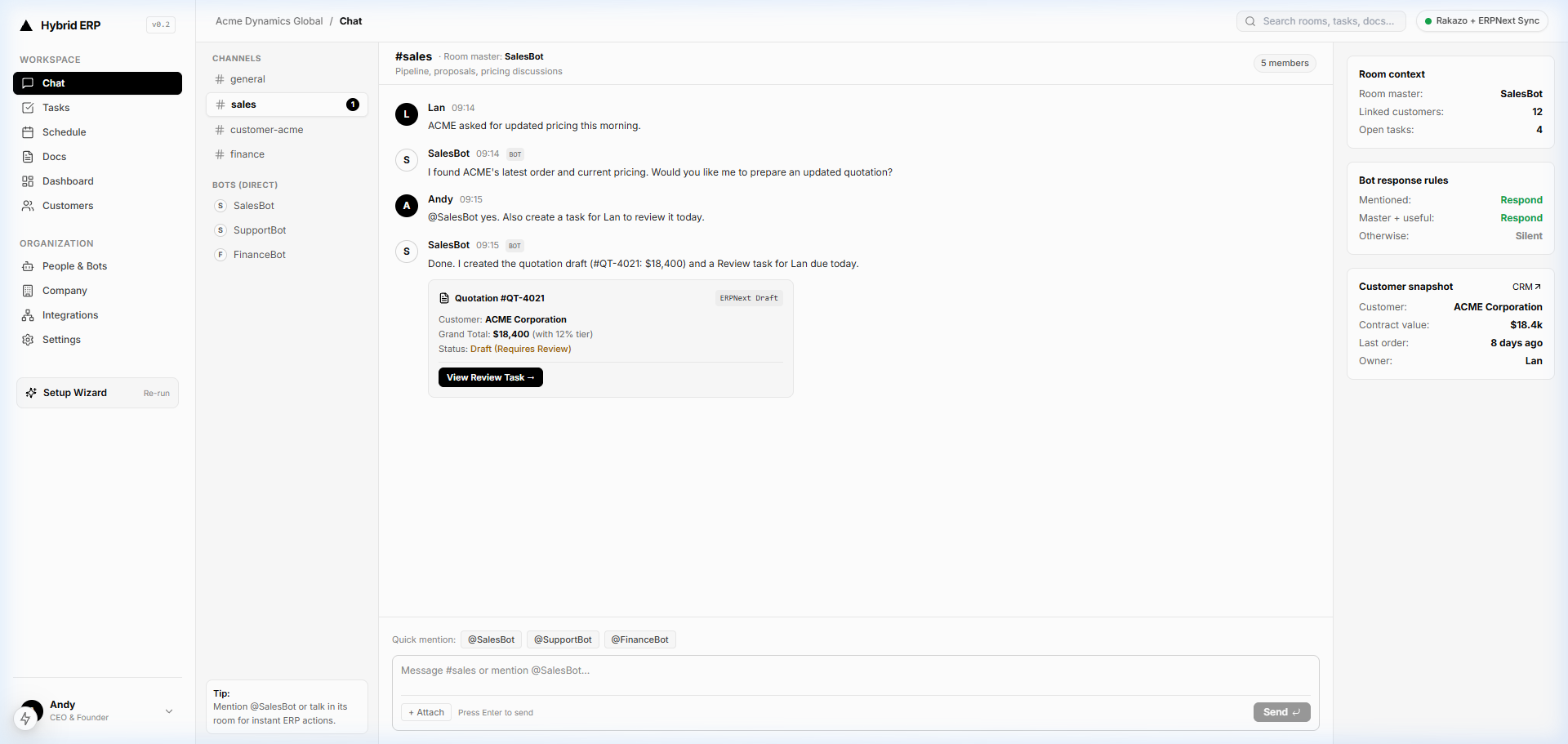
A chat-first layer does not replace that model. It puts an interpreter in front of it. You describe an intention — "which open invoices from this customer are past due" — and something translates that into the same queries the form would have run. The database underneath is unchanged.
That distinction matters more than it sounds. If the chat layer has its own store, you now have two sources of truth and a sync problem. If it reads and writes the same records as the forms, then chat is a second door into one building, and the building's rules still apply.
Why one foundation is the hard requirement
The failure mode of bolting a chat assistant onto a business is that the assistant ends up with a partial, stale copy of reality. It answers confidently from data that was true last Tuesday.
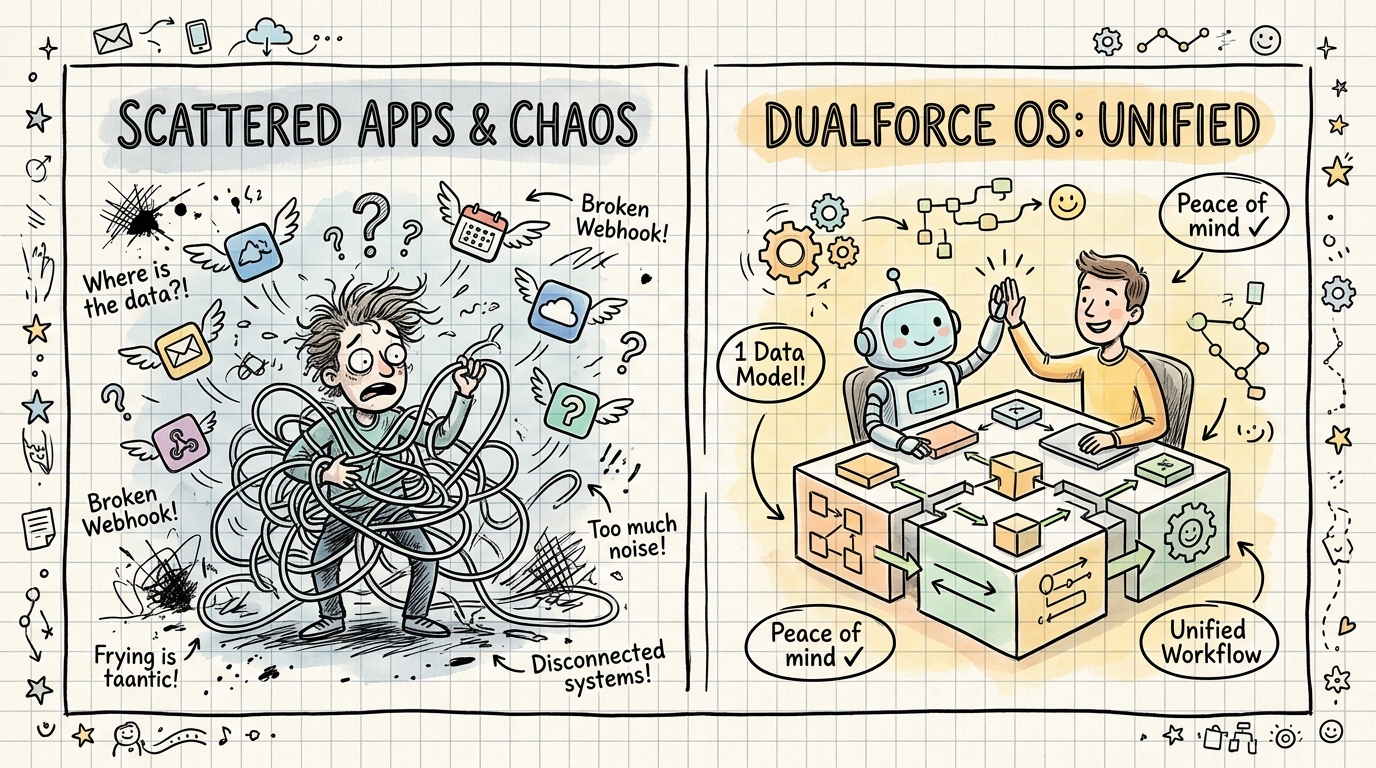
Running the conversation against the same records the rest of the company uses removes that class of error entirely — not by being clever, but by having nothing else to read. DualforceOS is built on that premise: the agents and the humans operate on one unified ERP foundation rather than on an integration layer stitched between systems.
Where chat is genuinely better
Chat wins where the work is a lookup with an awkward path. Anything that would require you to know which of nine modules owns a field is faster to ask for than to navigate to. The same is true of cross-cutting questions — ones that span two or three modules and would otherwise mean exporting to a spreadsheet.
It also wins for infrequent tasks. Interfaces are learned by repetition; a task you perform twice a year never becomes muscle memory, so the form is relearned every time. A sentence does not need to be relearned.
Where forms are still better
Bulk and precision work belongs in a form. Correcting forty line items is not forty sentences. Anything where you need to see the whole record at once, compare fields, and catch an inconsistency by eye is a layout problem, not a language problem.
Irreversible actions also benefit from the friction a form provides. A dialog that shows you exactly what is about to change is a safety feature, and "are you sure" in a chat window is a weaker version of it.
The part teams underestimate: permissions
A chat interface flattens discoverability. In a form-based ERP, a lot of access control is accidental — people do not see what they do not know how to reach. Ask a question in plain language and that accident disappears.
This is not a reason to avoid chat. It is a reason to get permissions right before turning it on, because chat will surface every gap that navigation was hiding. Teams that treat a chat rollout as a permissions audit tend to have a calm launch. Teams that treat it as a UI change tend not to.
Agents are the second step, not the first
Once conversation is the interface, the next move is obvious: let something act without being asked each time. That is where autonomous agents enter, and it is a meaningfully different risk profile.
A chat answer is wrong in front of you. An agent's action is wrong somewhere else, later, possibly many times. The controls that matter are therefore not about phrasing but about scope: which records an agent may touch, what it may change without confirmation, and what it must escalate. Those are the same questions you would ask about a new employee, which is a useful way to think about it.
How to evaluate this honestly
If you are considering a chat-first ERP, the questions worth asking are unglamorous:
- Does the chat layer read and write the same records as the forms, or its own copy?
- When the interpreter is unsure, does it ask or guess?
- Can you see what a request translated into, after the fact?
- Are agent permissions expressed in the same system as human permissions, or a separate one?
- What happens to an in-flight action when an agent is disabled mid-task?
A product that answers these clearly is describing an architecture. One that answers them with model names is describing a demo.
FAQ
Does chat-first mean the forms go away?
No, and a product claiming so should be treated with suspicion. Bulk editing, side-by-side comparison, and high-stakes confirmation are all better served by a form. Chat is an additional door, not a replacement building.
Is this just a chatbot on top of a database?
The distinction is whether it holds its own copy of the data. A chatbot with its own store has a sync problem and will eventually answer from stale records. A chat layer that queries the same records as the rest of the system cannot drift, because there is nothing to drift from.
What should we fix before enabling it?
Permissions. Chat removes the accidental access control that navigation provided, so any gap that existed quietly becomes reachable by asking. Audit roles first.
How is this different from an integration between separate tools?
An integration keeps two systems and adds a translation layer between them, which means two models of the truth and a reconciliation job. A unified foundation keeps one model, so there is nothing to reconcile.
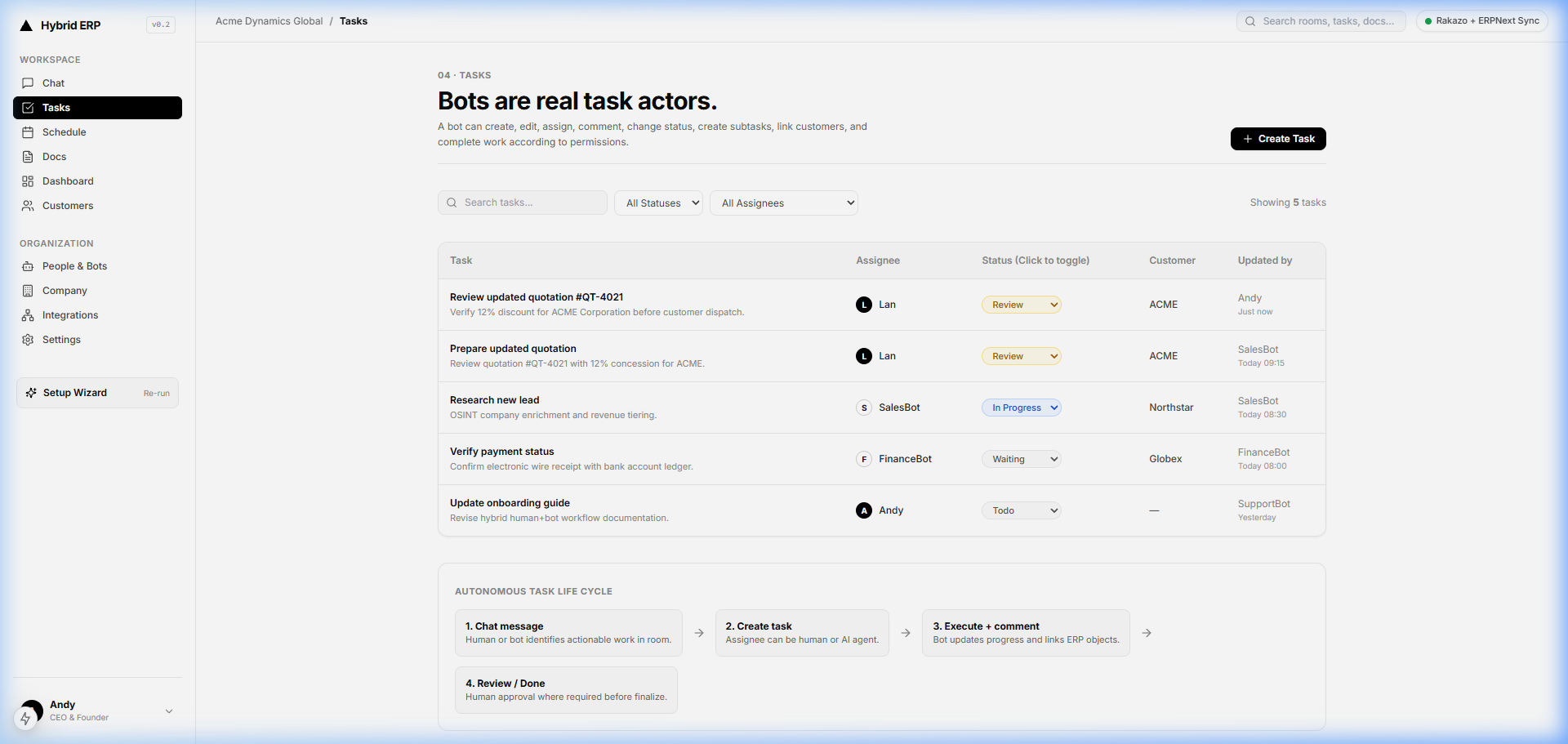
The DualforceOS team builds the chat-first enterprise operating system where human operators and AI agents share one workspace, structured business records, and human-governed approvals.
Discussion
No comments yet